


If you have been dealing with painful periods, pelvic pain that just won’t go away, or trouble conceiving, you may have already heard the word “endometriosis” from your doctor. And if medicines, hormonal tablets, and painkillers haven’t given you lasting relief, chances are your gynaecologist has mentioned laparoscopic surgery as the next step.
This is exactly where most women start feeling overwhelmed. Surgery sounds scary. The internet is full of half-information. And nobody really explains what actually happens during the procedure, how painful it is, how long recovery takes, or whether you’ll still be able to have children afterward.
This guide is written to answer all of that in plain, simple language. Dr. Tanu Soni, an Obstetrician, Gynaecologist, Fertility Specialist and Laparoscopic Surgeon based in Indore, has performed over 100 laparoscopic surgeries and works with women dealing with endometriosis, fibroids, and related gynaecological conditions every week. Everything below is based on how endometriosis is actually diagnosed and treated in real clinical practice — not just theory.
By the end of this article, you will understand what endometriosis is, why laparoscopic surgery is considered the gold standard for treating it, what to expect before and after the procedure, and how to find the right laparoscopic surgeon in Indore.
What Is Endometriosis?
Endometriosis is a condition in which tissue similar to the lining of the uterus grows outside the uterus — usually on the ovaries, fallopian tubes, or the tissue lining the pelvis. Like the normal uterine lining, this tissue thickens, breaks down, and bleeds with every menstrual cycle. But because it has no way to leave the body, it gets trapped, causing inflammation, scar tissue, and adhesions (bands of tissue that stick organs together).
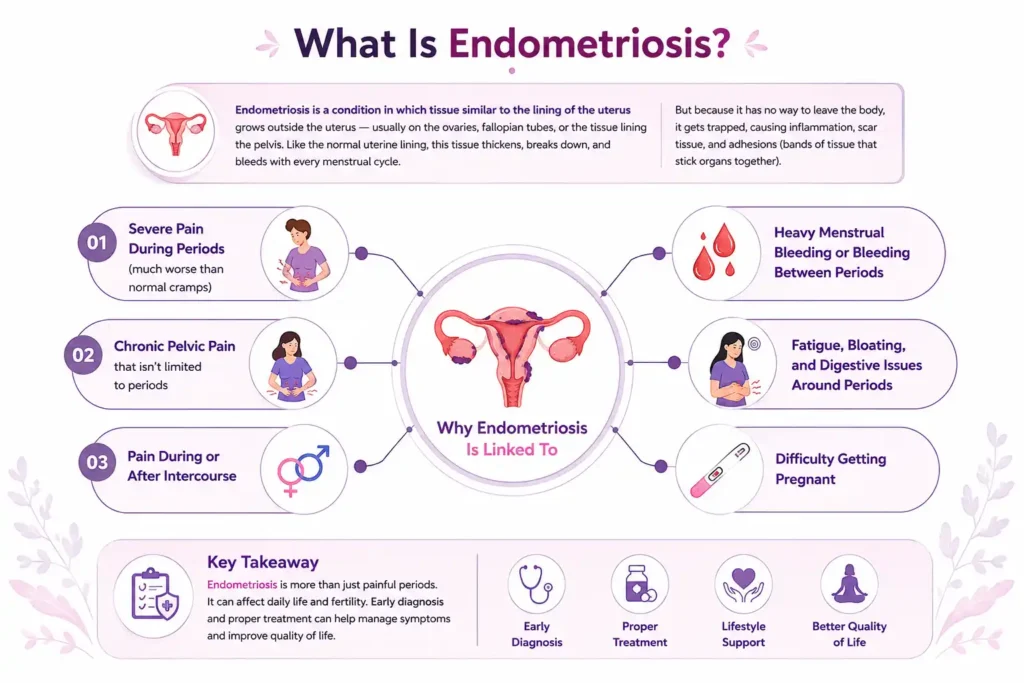
This is why endometriosis is so often linked to:
- Severe pain during periods (much worse than normal cramps)
- Chronic pelvic pain that isn’t limited to periods
- Pain during or after intercourse
- Heavy menstrual bleeding or bleeding between periods
- Fatigue, bloating, and digestive issues around periods
- Difficulty getting pregnant
Endometriosis is far more common than most people realise. It affects a large number of women of reproductive age, and studies from India suggest lakhs of women live with it, many without a proper diagnosis for years.
Why Endometriosis Often Goes Undiagnosed for Years
Here’s something most women don’t know: on average, it takes several years between the time symptoms start and the time endometriosis is actually diagnosed. This happens because:
- Painful periods are often dismissed as “normal” by family, friends, and sometimes even doctors
- Ultrasounds and blood tests can miss early or mild endometriosis
- Symptoms overlap with other conditions like PCOS, fibroids, or irritable bowel syndrome
This delay matters because untreated endometriosis can slowly get worse, affect fertility, and reduce quality of life. If your period pain regularly stops you from going to work or college, or over-the-counter painkillers no longer help, it’s worth getting properly evaluated instead of waiting it out.
Also Read : Laparoscopic Fertility Enhancing Surgery in Indore | Dr. Tanu Soni
The Stages of Endometriosis Explained
Doctors classify endometriosis into four stages based on how much tissue has grown, how deep it is, and whether it has caused adhesions. Understanding your stage helps in deciding whether laparoscopic surgery is needed right away or whether medication can be tried first.
- Stage I (Minimal): A few small, superficial implants with little to no scar tissue.
- Stage II (Mild): More implants than Stage I, slightly deeper, with mild adhesions.
- Stage III (Moderate): Multiple deep implants, along with small cysts on one or both ovaries and some noticeable adhesions.
- Stage IV (Severe): Many deep implants, large ovarian cysts (endometriomas), and thick adhesions that may involve the bowel or bladder.
It’s important to know that the stage of endometriosis does not always match the level of pain a woman feels. Some women with Stage I endometriosis experience severe pain, while others with Stage IV have milder symptoms. This is exactly why imaging alone isn’t enough, and why a thorough clinical evaluation — sometimes followed by laparoscopy — is so important.
How Is Endometriosis Diagnosed?
Diagnosis usually happens in steps:
- Detailed history and pelvic exam – Your doctor will ask about your pain pattern, cycle, and family history.
- Transvaginal ultrasound or MRI – These imaging tests can pick up larger endometriotic cysts (called endometriomas) but often miss smaller, superficial lesions.
- Diagnostic laparoscopy – This remains the only way to confirm endometriosis with certainty. A thin camera is inserted through a small cut near the navel, allowing the surgeon to directly see the pelvic organs and identify endometrial tissue that imaging cannot detect.
This is an important point: laparoscopy is both a diagnostic tool and a treatment. In most cases, if endometriosis is found during the diagnostic laparoscopy, it is treated in the same sitting, so the patient doesn’t need a second surgery.
What Is Laparoscopic Surgery?
Laparoscopic surgery, also called keyhole surgery or minimally invasive surgery, is a technique where the surgeon operates through a few small incisions (usually 0.5 to 1.5 cm) instead of one large cut. A laparoscope — a thin tube with a camera and light attached — is inserted through one incision, giving the surgeon a magnified, high-definition view of the pelvic organs on a screen. Fine surgical instruments are passed through the other small incisions to carry out the actual treatment.
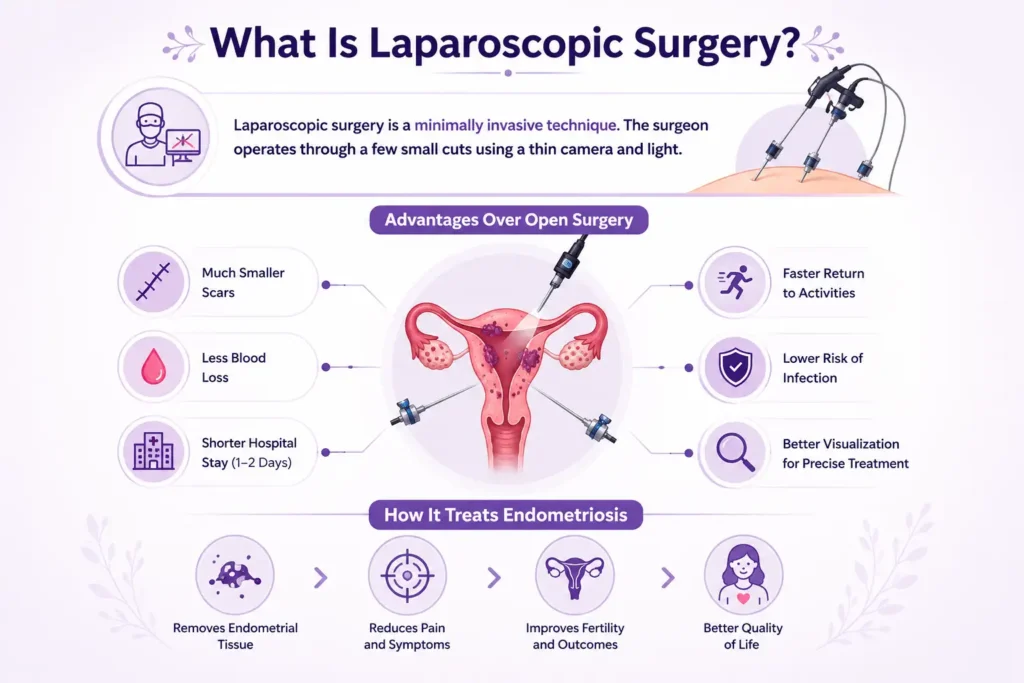
Compared to traditional open surgery (laparotomy), laparoscopic surgery for endometriosis offers several advantages:
- Much smaller scars, usually just 2 to 4 tiny cuts
- Less blood loss during surgery
- Shorter hospital stay, often just 1 to 2 days
- Faster return to daily activities
- Lower risk of infection and wound complications
- Better visualisation for the surgeon, which means more precise removal of endometrial tissue
How Laparoscopic Surgery Treats Endometriosis
During laparoscopic surgery for endometriosis, the surgeon carefully identifies and removes:
- Visible endometrial implants and lesions
- Scar tissue and adhesions that may be pulling organs together
- Endometriomas (chocolate cysts) on the ovaries, if present
- Any blockages affecting the fallopian tubes, which can restore natural fertility
The surgery is generally done under general anaesthesia and typically takes anywhere from 45 minutes to a couple of hours, depending on how extensive the endometriosis is. Mild cases (Stage I-II) usually involve a quicker procedure, while advanced cases (Stage III-IV), where endometriosis has spread deeper or involves the bowel or bladder, need a more detailed surgical approach.
Also Read : Best Gynecologist and Laparoscopic Surgeon in Indore, Madhya Pradesh
Who Actually Needs Laparoscopic Surgery for Endometriosis?
Not every woman with endometriosis needs surgery right away. Your gynaecologist will usually recommend laparoscopic treatment if:
- Pain medications and hormonal therapy haven’t controlled your symptoms
- You have an endometrioma (ovarian cyst caused by endometriosis)
- Endometriosis is suspected to be affecting your fertility
- There is a concern about the endometriosis affecting the bowel, bladder, or ureters
- You need a confirmed diagnosis before planning pregnancy or IVF
Laparoscopic Surgery vs Medication: How Is the Decision Made?
Surgery is not always the first step for endometriosis. Most gynaecologists follow a step-by-step approach:
- Pain management first – Painkillers and anti-inflammatory medicines for mild symptoms.
- Hormonal therapy – Birth control pills, progesterone therapy, or other hormonal treatments to slow down the growth of endometrial tissue and reduce pain.
- Laparoscopic surgery – Considered when medication doesn’t control symptoms, when there’s an ovarian cyst that needs removal, or when fertility is a concern and a clear diagnosis is needed.
The right choice really depends on your age, symptom severity, whether you’re trying to conceive, and how the condition is affecting your daily life. This is a conversation worth having in detail with your gynaecologist rather than deciding based on generic information online.
Are There Any Risks Involved in Laparoscopic Surgery?
Like any surgical procedure, laparoscopic surgery does carry some risks, though they are generally low when performed by an experienced surgeon. These can include:
- Minor bleeding or bruising around the incision sites
- A small risk of infection
- Rare injury to nearby organs such as the bladder, bowel, or ureters
- Reaction to anaesthesia (uncommon, and screened for beforehand)
- In a small number of complex cases, the surgeon may need to convert to open surgery if visibility or bleeding control becomes difficult
This is exactly why choosing a surgeon with genuine laparoscopic experience matters. An experienced surgeon can anticipate and manage these situations quickly, which keeps the overall risk low.
Recovery After Laparoscopic Surgery for Endometriosis
One of the biggest worries patients have is about recovery. Here’s a realistic timeline:
- First 24-48 hours: You’ll likely stay in the hospital for a day or two. Mild soreness, bloating, and tiredness are normal. Some women feel shoulder pain for a day — this is from the gas used to inflate the abdomen during surgery, and it settles on its own.
- First week: Rest is important. Avoid heavy lifting, driving, or strenuous activity. Light walking is actually encouraged to help recovery.
- 1-2 weeks: Most women are able to return to desk jobs or light work.
- 2-4 weeks: Full recovery is usually complete, though this can take a little longer if the surgery was more extensive.
Compared to open surgery, where recovery can take 6 weeks or more, laparoscopic surgery gets most women back to their normal routine much faster — which is one of the main reasons it’s now considered the standard approach worldwide.
Laparoscopic Surgery, Endometriosis, and Fertility
A question almost every patient asks is: “Will I be able to get pregnant after this?”
Here’s the honest, evidence-based answer: for many women, laparoscopic surgery actually improves the chances of natural conception. By removing endometrial tissue, cysts, and adhesions, the surgery can restore normal pelvic anatomy and unblock fallopian tubes. Doctors generally do not recommend removing the uterus or ovaries for endometriosis unless it’s absolutely necessary, precisely because preserving fertility is a priority for most women dealing with this condition.
If you’ve been trying to conceive for a while and have also been diagnosed with endometriosis, laparoscopic treatment combined with proper fertility guidance can make a real difference to your chances.
Also Read : Advanced Laparoscopic Treatment for Endometriosis & Fibroids in Indore | Dr. Tanu Soni
Life After Laparoscopic Surgery: What Changes?
Most women notice a significant drop in pelvic pain and period-related discomfort within a few weeks of laparoscopic surgery. For many, this is the first real relief they’ve felt in years. That said, it helps to have realistic expectations:
- Pain relief: Most women report major improvement, though very rarely, some pain can persist and may need continued management.
- Menstrual cycles: Periods usually continue normally after surgery, since the uterus and ovaries are preserved in almost all cases.
- Fertility: Many women find it easier to conceive naturally after surgery, especially if blocked tubes or ovarian cysts were part of the problem. Some may still be advised to consider IUI or IVF depending on other factors.
- Follow-up care: Your gynaecologist may recommend hormonal therapy after surgery to reduce the chances of endometriosis returning, especially if you’re not planning pregnancy immediately.
Long-term outlook after laparoscopic treatment for endometriosis is generally very good, especially when the surgery is done by an experienced hand and followed up with the right aftercare plan.
Why Choose Dr. Tanu Soni for Laparoscopic Endometriosis Surgery in Indore
Choosing the right surgeon matters more than most people realise, especially for a condition like endometriosis where precision during surgery directly affects both pain relief and future fertility.
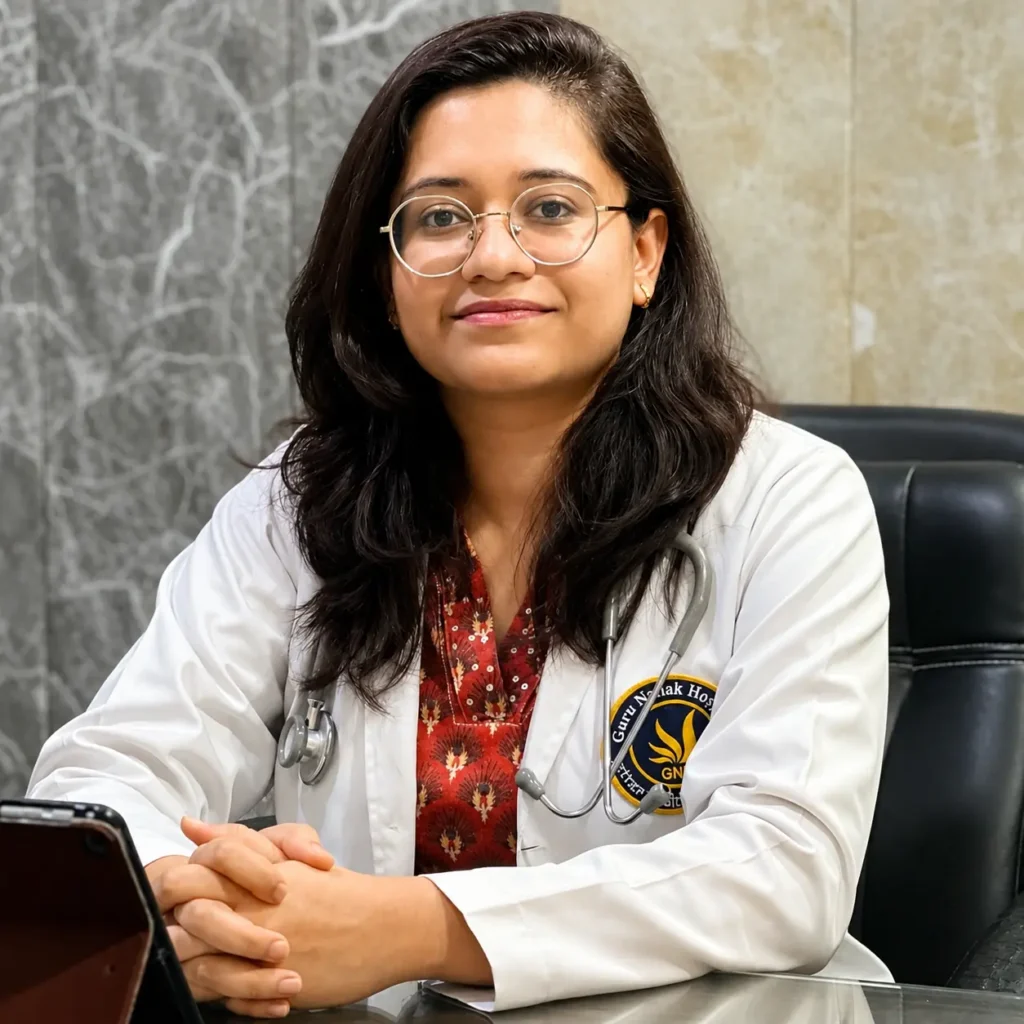
Dr. Tanu Soni (MBBS, MS, DNB) is a practicing Obstetrician, Gynaecologist, Fertility Specialist, and Laparoscopic Surgeon in Indore with:
- 9+ years of clinical experience in women’s health
- 100+ successful laparoscopic surgeries, including endometriosis and fibroid cases
- Focused expertise in fertility-preserving, minimally invasive treatment
- A personalised approach that considers each patient’s pain history, fertility goals, and overall health before recommending surgery
Whether you need a second opinion, a proper diagnosis, or are ready to explore laparoscopic treatment, you can reach out directly:
- Phone: 70897 09554
- Clinic Address: OPD No. 38, Bombay Hospital Service Road, Scheme No. 94, Sector WA, Indore, Madhya Pradesh – 452010
- Email: tanusoni.gynae@gmail.com
You can also book a consultation online to discuss your symptoms and find out whether laparoscopic surgery is the right next step for you.
Tips to Prepare Before Your Laparoscopic Surgery
If your doctor has recommended laparoscopic surgery for endometriosis, here’s how to prepare:
- Get all recommended pre-surgery tests done (blood work, ultrasound) well in advance
- Arrange for someone to drive you home and stay with you for the first day or two
- Wear loose, comfortable clothing on the day of surgery
- Follow fasting instructions given by your surgical team
- Ask your doctor about pausing any blood-thinning medication or supplements beforehand
- Prepare simple, light meals in advance for the first few days at home
Frequently Asked Questions
1. Is laparoscopic surgery painful for endometriosis treatment?
Most women experience mild to moderate discomfort, not severe pain. This is well controlled with prescribed pain medication and usually settles within the first week.
2. How long does it take to recover from laparoscopic endometriosis surgery?
Light activities and desk work can usually resume in 1-2 weeks. Full recovery generally takes 2-4 weeks, depending on how extensive the surgery was.
3. Can endometriosis come back after laparoscopic surgery?
Endometriosis can sometimes return over time, especially if left untreated for long periods before surgery. Regular follow-up with your gynaecologist helps catch any recurrence early.
4. Is laparoscopic surgery the only way to diagnose endometriosis?
It’s currently the most reliable way to confirm the diagnosis, since ultrasounds and MRIs can miss smaller lesions. However, your doctor may first try imaging and symptom-based assessment before recommending surgery.
5. Will I be able to get pregnant after laparoscopic surgery for endometriosis?
For many women, yes. Removing endometrial tissue and adhesions can improve natural fertility. Your surgeon will always aim to preserve the uterus and ovaries unless there’s a strong medical reason not to.
6. How do I choose the right laparoscopic surgeon in Indore for endometriosis?
Look for a gynaecologist with specific experience in laparoscopic and fertility-preserving surgery, not just general gynaecology. Ask about their surgical volume, approach to fertility preservation, and post-surgery follow-up care.
7. What is the difference between laparoscopic surgery and open surgery for endometriosis?
Laparoscopic surgery uses a few small incisions and a camera, leading to less pain, smaller scars, and faster recovery. Open surgery involves one large incision and is now used only in complex cases where laparoscopy isn’t suitable.
8. Do I need to stay in the hospital after laparoscopic surgery for endometriosis?
Most patients stay for 1-2 days, depending on how extensive the surgery was and how they respond to anaesthesia. Your surgical team will guide you on discharge timing based on your recovery.
Final Thoughts
Endometriosis is a manageable condition, but only when it’s diagnosed correctly and treated by someone experienced in laparoscopic techniques. If period pain has been controlling your life, or you’ve been trying to conceive without success, don’t wait years for answers the way so many women unfortunately do.
If you’re in Indore and looking for a trusted, experienced laparoscopic surgeon for endometriosis, Dr. Tanu Soni is available for consultations to help you understand your condition and the best treatment path forward.
Call: 70897 09554
tanusoni.gynae@gmail.com
This article is for informational purposes and does not replace a personal medical consultation. Please speak to a qualified gynaecologist to discuss your specific symptoms and treatment options.