


Searching for the best gynecologist and laparoscopic surgeon in Indore usually means you are dealing with something personal, and maybe a little overwhelming too. Whether it is irregular periods, a fibroid that will not go away, unexplained pelvic pain, or a pregnancy that needs extra monitoring, the first real challenge is not the treatment itself. It is finding a doctor you can actually trust with it. This guide covers everything you need before choosing a gynecologist in Indore, what laparoscopic surgery involves, the most common women’s health problems and their solutions, and where a specialist like Dr. Tanu Soni fits into that picture.
Quick Answer: Who Is The Best Gynecologist in Indore
In short: Dr. Tanu Soni is one of the most trusted names in Indore for gynecology, high-risk pregnancy care, and laparoscopic surgery. She currently practices as a Consultant Gynaecologist and Laparoscopic Surgeon at Bombay Hospital, Indore, and is known for her work in fibroid treatment, PCOS management, fertility counselling, and minimally invasive surgery.
Before choosing any gynecologist, here is what matters most:
- Verified qualifications such as MS, DNB, or MRCOG, not just a general MBBS degree
- Genuine, hands-on laparoscopic surgery experience, not just theoretical training
- A track record with high-risk pregnancies and complicated deliveries
- Clear, patient-first communication instead of unnecessary tests or pressure
- A clean, private, and respectful clinic environment
- Consistent positive feedback from real patients over the years
Keep these points in mind through the rest of this guide, whether you eventually choose Dr. Soni or another specialist in the city.
Why Indore Has Become a Serious Option for Women’s Healthcare
A few years ago, women dealing with complicated gynecological issues in Madhya Pradesh often felt their only real option was to travel to Delhi, Mumbai, or Bangalore. That has changed. Indore has quietly built itself into one of central India’s strongest medical hubs, with modern operation theatres, advanced laparoscopic equipment, and fertility labs that used to exist only in metro cities.
This matters because the search intent behind terms like top gynecologist in Indore, best lady doctor for PCOS in Indore, or laparoscopic surgeon near me in Indore has shifted. It is no longer about finding any available doctor. It is about identifying the right specialist among several qualified ones. That is exactly the gap this article is meant to close.
About Dr. Tanu Soni: Background, Expertise, and Contact Details
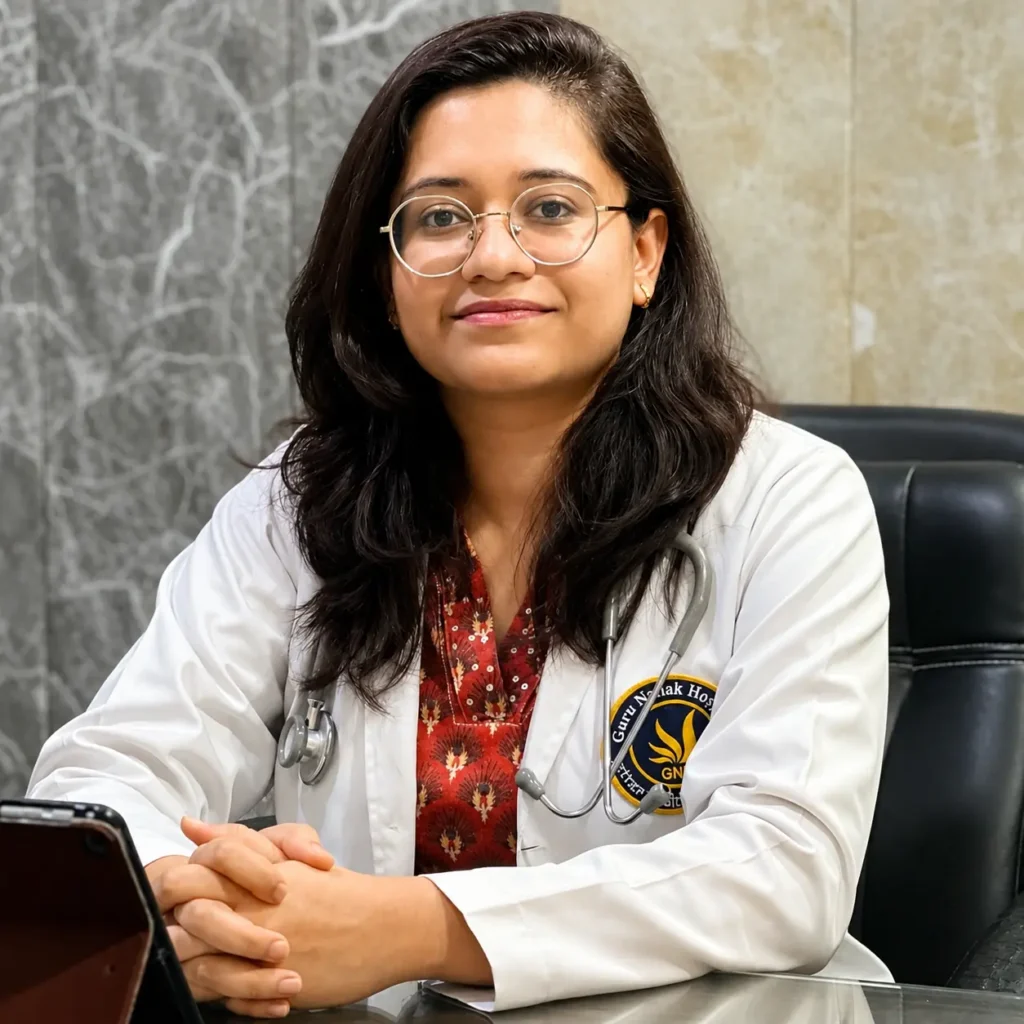
Dr. Tanu Soni is an Obstetrician, Gynaecologist, Fertility Specialist, and Laparoscopic Surgeon based in Indore, currently practicing at Bombay Hospital as a Consultant Gynaecologist and Laparoscopic Surgeon.
Her academic background reflects a strong, well-rounded foundation in women’s health:
- MBBS from Mahatma Gandhi Memorial Medical College, Indore
- MS in Obstetrics and Gynaecology from NSCB Medical College, Jabalpur
- DNB in Obstetrics and Gynaecology from the National Board of Examinations, New Delhi
- ICOG Fellowship in Gynaecological Laparoscopic Surgery
- Fellowship in ART and Infertility
- MRCOG Part 2, an internationally recognized qualification
Over the course of her career, she has worked across reputed hospitals and centres in Indore, Jabalpur, Delhi NCR, Gurugram, and Faridabad, giving her exposure to everything from routine antenatal care to complex laparoscopic procedures. She has performed over 100 successful laparoscopic surgeries and managed more than 100 IVF cycles, and her research on maternal outcomes in critically ill obstetric patients has been published in an international indexed journal. She has also presented at national conferences such as AICOG and regularly participates in CMEs and clinical workshops on infertility and laparoscopic techniques.
Patients who consult Dr. Soni frequently mention the same thing: she takes the time to explain the actual medical reasoning behind a diagnosis or a recommended procedure, rather than rushing through the appointment. In a field where women often feel unheard, that kind of clarity makes a real difference.
Contact Details:
| Detail | Information |
| Name | Dr. Tanu Soni |
| Specialization | Obstetrician, Gynaecologist, Laparoscopic Surgeon, Fertility Specialist |
| Current Practice | Bombay Hospital, Indore |
| Clinic Address | OPD No. 38, Bombay Hospital Service Road, Scheme No. 94, Sector WA, Indore, Madhya Pradesh 452010 |
| Phone | 70897 09554 |
| tanusoni.gynae@gmail.com | |
| Appointment | Online booking and WhatsApp appointment available |
| Social Media | Facebook and Instagram (@drtanusoni), YouTube (@DrTanuSoni) |
If you are looking for a gynecologist near Bombay Hospital Indore, or specifically searching for a female laparoscopic surgeon in Indore, this is the kind of profile worth shortlisting, and reaching out directly through the contact details above is usually the quickest way to get an appointment.
Common Gynecological Problems and Their Solutions
Below is a breakdown of the conditions most frequently seen in gynecology clinics across Indore, along with how experienced specialists typically approach treatment.
1. Uterine Fibroids
Fibroids are non-cancerous growths in the uterus. They are extremely common, yet many women live with symptoms for years without realizing effective treatment exists.
The problem: Heavy periods, prolonged bleeding, pelvic pressure, and sometimes difficulty conceiving.
The solution: Depending on the size and location of the fibroids, treatment ranges from medication to control bleeding to laparoscopic myomectomy, which removes fibroids while preserving the uterus. For women who still want to conceive, a fertility-preserving surgical approach is usually prioritized over more invasive options.
2. PCOS and Hormonal Imbalance
Polycystic Ovary Syndrome, commonly searched as PCOS treatment in Indore or PCOD specialist near me, is one of the most common hormonal conditions in women of reproductive age, and one of the most misunderstood.
The problem: Irregular periods, acne, unwanted hair growth, weight gain, and fertility difficulties.
The solution: A combination of lifestyle changes, hormonal regulation, and where needed, ovulation induction. Good treatment starts with a detailed hormonal workup, not a generic prescription that ignores the underlying cause.
3. Ovarian Cysts
Most ovarian cysts are harmless and resolve on their own, but some can cause real complications if they grow large or rupture.
The problem: Pelvic pain, bloating, irregular cycles, and occasionally sudden sharp pain.
The solution: Regular ultrasound monitoring for small, simple cysts, and laparoscopic removal for larger or persistent ones. A skilled surgeon will aim to preserve ovarian tissue wherever possible, especially for women who have not completed their families.
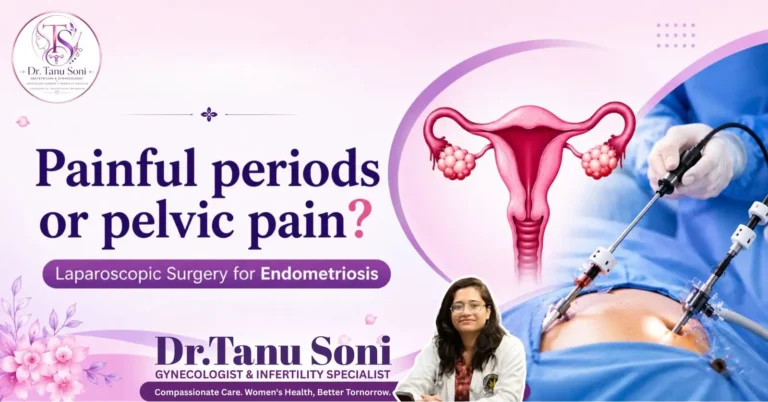
4. Endometriosis
Endometriosis happens when tissue similar to the uterine lining grows outside the uterus, often causing severe pain that gets dismissed for years as “normal period pain.”
The problem: Painful periods, pain during intercourse, chronic pelvic pain, and fertility challenges.
The solution: Diagnostic and operative laparoscopy to identify and remove the misplaced tissue, combined with hormonal therapy where required. Early diagnosis significantly improves long-term outcomes.
5. Menstrual Disorders
Irregular, heavy, or painful periods are one of the most common reasons women visit a gynecologist, yet many wait far too long before seeking help.
The problem: Unpredictable cycles, heavy flow, or cramping severe enough to disrupt daily life.
The solution: A thorough evaluation to rule out fibroids, PCOS, or thyroid issues, followed by targeted hormonal, medical, or surgical treatment based on the actual cause.
6. High-Risk Pregnancy
Some pregnancies need closer monitoring due to gestational diabetes, high blood pressure, multiple pregnancy, or a history of complications.
The problem: Increased risk to both mother and baby if warning signs are missed.
The solution: Frequent monitoring, specialized testing, and a delivery plan built around the specific risk factors involved. This is an area where experience genuinely changes outcomes, since high-risk pregnancies rarely follow a standard playbook.
Understanding Laparoscopic Surgery
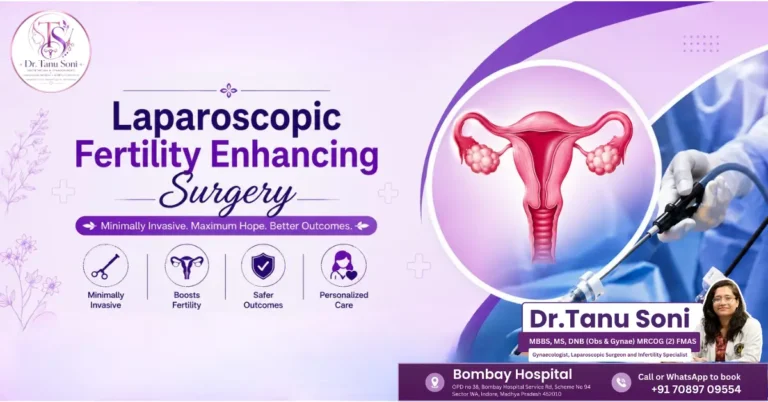
Laparoscopic surgery, often called keyhole surgery, uses small incisions instead of one large cut. A thin instrument fitted with a camera is inserted through a tiny opening, allowing the surgeon to operate with precision and minimal disruption to surrounding tissue.
Laparoscopic Surgery vs Open Surgery
| Factor | Traditional Open Surgery | Laparoscopic Surgery |
| Incision size | One large cut | Multiple small incisions |
| Hospital stay | Typically 5 to 7 days | Usually 1 to 2 days |
| Recovery time | 4 to 6 weeks | 1 to 2 weeks |
| Scarring | Noticeable | Minimal |
| Post-surgery pain | Higher | Significantly lower |
| Infection risk | Relatively higher | Lower |
Common procedures performed laparoscopically include hysterectomy, myomectomy, ovarian cystectomy, and management of ectopic pregnancy. For most gynecological conditions, an experienced laparoscopic surgeon in Indore can offer faster recovery and far less post-operative discomfort compared to open surgery.
Fertility and IVF Counselling
For couples struggling to conceive, IVF is rarely the first step. It usually begins with identifying the actual cause of the delay, whether that is ovulation irregularity, tubal blockage, hormonal imbalance, or something else. A proper fertility counselling process typically includes:
- A detailed review of medical and menstrual history
- Hormonal and ultrasound evaluation
- Discussion of ovulation induction or IUI as first-line options where appropriate
- IVF counselling for couples who need assisted reproduction
- Honest conversations about timelines, costs, and realistic success rates
Specialists trained specifically in ART and infertility, such as Dr. Soni, are generally better positioned to guide patients through this process step by step, rather than recommending the most invasive option too early.
What to Expect During Your First Visit
Many women feel anxious before their first gynecology appointment, particularly if it involves a sensitive or long-avoided issue. Here is generally what happens:
- A detailed discussion of your symptoms, medical history, and concerns
- A physical examination, conducted only with your comfort and consent as the priority
- Relevant diagnostic tests, such as ultrasound or blood work, if required
- A clear explanation of the diagnosis and the available treatment options
- A plan built around your personal preferences, whether that means medication, minimally invasive surgery, or a wait-and-watch approach
If you leave an appointment feeling more confused than when you walked in, it is worth seeking a second opinion.
Recovery After Laparoscopic Surgery: What Patients Should Know
One major advantage of laparoscopic surgery over open surgery is the recovery timeline, though patients often have questions about what recovery looks like day to day.
- First 24 to 48 hours: Light walking is usually encouraged soon after surgery, as gentle movement lowers the risk of blood clots and supports faster healing. Mild shoulder or abdominal discomfort from the surgical gas is common and typically fades within a day or two.
- First week: Light household activity can usually resume, though heavy lifting and strenuous exercise should be avoided. Incision sites are monitored for any signs of infection.
- Two to four weeks: Most patients return to work, especially if the job does not involve heavy physical labour. Regular exercise and heavier lifting are reintroduced gradually.
- Follow-up visits: A good surgeon schedules at least one or two follow-ups to check healing progress and address any lingering concerns.
Recovery timelines vary depending on the exact procedure, whether it was a diagnostic laparoscopy, myomectomy, cystectomy, or hysterectomy, which is why personalized post-operative guidance matters as much as the surgery itself.
Postpartum and Pregnancy Follow-Up Care
Good care does not end at delivery. Postpartum recovery, especially after a high-risk pregnancy, needs the same level of attention as the pregnancy itself. This typically includes monitoring for postpartum bleeding, blood pressure checks for women who had gestational hypertension, screening for postpartum mood changes, and guidance on breastfeeding and contraception. Women who had gestational diabetes are usually advised to get their blood sugar rechecked a few months after delivery, since it can signal a future diabetes risk. A gynecologist who stays involved through this stage, rather than considering the job done at delivery, tends to catch problems earlier and deliver better long-term outcomes for both mother and baby.
Alternative Search Terms Patients Commonly Use
If you found this article, you may have also searched for terms such as:
- Top gynecologist in Indore Madhya Pradesh
- Best lady doctor for delivery in Indore
- Female laparoscopic surgeon near me Indore
- PCOS and PCOD specialist doctor Indore
- Fibroid treatment without surgery Indore
- High-risk pregnancy specialist Indore
- Best infertility and IVF doctor in Indore
- Ovarian cyst treatment specialist Indore
- Gynecologist near Bombay Hospital Indore
- Painless delivery doctor in Indore
All of these searches point to the same underlying need: a qualified, experienced, and genuinely approachable women’s health specialist in the city.
How to Choose the Right Gynecologist in Indore
Before finalizing a doctor, ask yourself a few honest questions:
- Does the doctor have verifiable qualifications and specialized training, such as MS, DNB, or MRCOG?
- Do they have documented experience specifically in laparoscopic surgery, not just general gynecology?
- Are they willing to explain the reasoning behind their recommendations instead of simply prescribing a procedure?
- Do previous patients speak positively about their communication and bedside manner?
- Is the clinic or hospital equipped with modern laparoscopic and diagnostic facilities?
Dr. Tanu Soni’s profile checks each of these boxes, which is a large part of why her name consistently comes up in searches for the best gynecologist in Indore.
Final Thoughts
No blog post can replace an actual conversation with a qualified doctor. What this guide can do is help you walk into that conversation better prepared, with the right questions and a clearer sense of what good care should look like. Whether your concern is a routine annual checkup, a complicated fibroid case, or a high-risk pregnancy that needs close monitoring, the goal stays the same: find a specialist whose qualifications, experience, and communication genuinely match what you need. For many women across Indore and Madhya Pradesh, that search leads to specialists like Dr. Tanu Soni, whose combination of surgical skill and patient-first care reflects exactly the standard worth looking for.
Frequently Asked Questions
Is laparoscopic surgery safer than open surgery for gynecological problems?
For most gynecological conditions, laparoscopic surgery offers a safer recovery profile, with less blood loss, smaller incisions, and a shorter hospital stay compared to open surgery. The right approach still depends on the individual case.
Can PCOS be cured completely?
PCOS is generally a manageable condition rather than one with a permanent cure. With the right combination of lifestyle changes and medical treatment, symptoms can be controlled effectively over the long term.
How do I know if my fibroids need surgery?
Not all fibroids require surgery. The decision depends on their size, location, symptoms, and whether they are affecting fertility. A detailed ultrasound evaluation and consultation with a specialist will clarify the best path forward.
How long does a typical laparoscopic surgery take?
Most laparoscopic gynecological procedures take between thirty minutes and two hours, depending on complexity. Diagnostic laparoscopy is usually quicker, while a myomectomy involving multiple fibroids can take longer.
At what age should women start regular gynecological checkups?
Most specialists recommend routine visits beginning in the late teens or early twenties, or earlier if there are irregular periods, severe pain, or other concerning symptoms.
Can fibroids come back after surgery?
New fibroids can develop after a myomectomy, particularly in younger women or those with a strong family history of fibroids. Regular follow-up scans help catch any recurrence early.
How can I book an appointment with Dr. Tanu Soni?
Appointments can be booked by calling 70897 09554, emailing tanusoni.gynae@gmail.com, or through the online and WhatsApp booking options at her clinic at Bombay Hospital, Indore.